
For both sides
Do notaries get paid if the loan doesn't close? Only if your terms say so.

Arron JohnsonNotary signing agent · Author of Closed Together · November 2026
The short answer
Only if the terms agreed before the signing say so. There's no universal rule. Some agencies pay the full fee when a deal dies after the signing, some pay only a trip or print fee, and some pay nothing. The fix is a written dead-deal policy that every agency sees before it ever comes up.
Sometimes you do everything right and the deal still dies. You printed the package, reviewed it, drove out, ran the signing, and sent everything back. Then the loan doesn't fund. Or the buyer walks. Or the lender pulls out. A few days later the agency offers you the trip fee. Or the print fee. Or nothing at all.
It's happened to me more than once. Here's how I'd set things up so you're never deciding where you stand after the work is already done.
Do notaries get paid when a loan doesn't close?
It depends on what was agreed before the signing. There's no one rule that covers every agency. Some pay the full fee because the work was done. Some pay part of it, usually the trip or print fee. Some pay nothing.
Most of the time, the answer comes down to whether anyone put terms in writing. If nobody did, you're negotiating after the work is finished. That's the weakest spot you can be in.
What is a dead-deal policy for a notary signing agent?
It's your written answer to one question: what do I get paid when I complete a signing and the deal falls apart afterward? Decide it now, while you're calm and nothing is on the line.
Keep it simple. A good policy says:
- What you charge if the deal dies after the signing. The full fee, or a set amount. Your call.
- When payment is due. Put your payment terms right next to it.
- That it applies no matter why the deal died. Your work was the same whether the file funded or not.
Put it on your rate sheet or in your terms. The rate sheet in the book's toolkit has a line for it, right under second trip or re-sign.
How do you get a title company to agree before the signing?
Send it to them before the next order, not after the deal dies.
- Put your terms on one page. Standard fee, travel, rush, after hours, printing, second trip, dead-deal policy, and payment terms.
- Send that page to every agency you work with. Keep a copy of what each one agreed to.
- Get every change in writing. If an agency offers an extra travel fee or a rush fee to get a yes, get it in writing before you accept. A short email is enough.
Once an agency has agreed to your terms in writing, a dead deal becomes a conversation instead of an argument.
What if the agency still won't pay?
Start by pointing back to the terms they agreed to, kindly and with the email attached. Most billing disputes end right there.
That's why records matter. Keep your orders, confirmations, invoices, and any journal entries your state requires. Most of the time you'll never look at them again. But I once went two years without being paid for a completed signing. When it finally came to a head, their side asked me to prove I'd done the signing at all. I showed them the recorded deed with my notary stamp on it. They paid.
You shouldn't need a recorded deed to settle a signing fee. But it's a lot easier to settle when you can prove the work and point to terms they agreed to. Rules on collecting unpaid fees vary, so check your state's current rules if it ever gets that far.
Should a title agency pay a notary for a dead deal?
If you're on the agency side, here's how it looks from the notary's seat. The notary didn't kill the deal. They printed the package, drove out, ran the signing, and sent everything back. The work was done exactly the way it would have been if the file had funded.
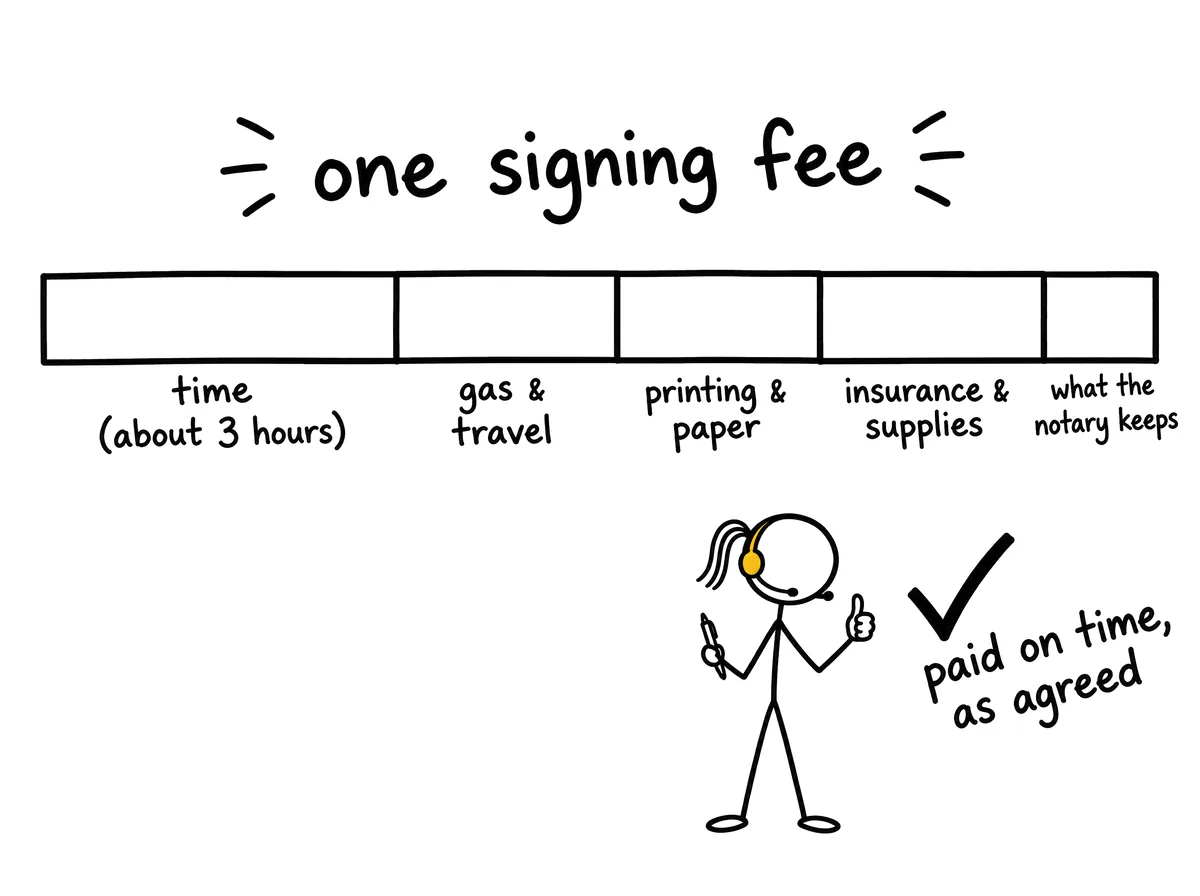
To you, the fee is one line on the settlement statement. To the notary, it covers about three hours of their day, plus gas, printing, supplies, and insurance.
If your office has a dead-deal policy, tell your notaries before the signing, in writing, so they can decide whether to accept. Changing the terms after the work is done is just another way of not paying for it. And notaries talk. An agency that argues over invoices quietly loses its best notaries to the agency down the street, and may never find out why.
This is Chapter 7 on both sides of Closed Together: Pricing Like a Pro on the notary side, and Paying Like a Partner on the title agent side. Flip the book over to see the same dead deal from the other seat.
This article shares general practices and personal experience from real signings. It isn't legal advice. Notary laws, fees, and requirements vary by state, and lenders and title agencies set their own instructions, so check the current rules where you work.
Quick answers
Should a notary get paid if the loan falls through after the signing?
The work was done the same whether the loan funded or not, so many notaries charge for it. Whether you get paid usually comes down to the terms agreed before the signing. Put a dead-deal policy in writing and share it with every agency.
What should a notary's dead-deal policy include?
What you charge if a deal dies after you complete the signing, when payment is due, and that it applies no matter why the deal died. Keep it on your rate sheet and send it to every agency before their next order.
How can a notary prove they completed a signing if a title company won't pay?
Keep your orders, confirmations, invoices, the emails where fees were agreed, and any journal entries your state requires. If the deal recorded, the recorded document with your notary stamp shows the signing happened.